

NFT TCGS:
EXPLORING PARALLEL AND SKYWEAVER
BACKGROUND
Trading card games (TCGs) combine strategic deck building with collectible cards, introduced by the launch of Magic: The Gathering (MTG) in 1993 [1]. Other notable TCGs include Pokemon and Yu-Gi-Oh!. MTG had its best financial year ever in 2020 with $581.2MM in revenue, growing 27% YoY [2]. As a whole, the global TCG market size is projected to reach $31.2B by 2027, up from $11.1B in 2020 [3].
Like many industries, TCGs were forced to evolve with the internet. MTG launched its online version in 2002 [4], while the current market leader Hearthstone went live in 2014 [5]. Software really did eat the world, and digital TCGs account for ~98.8% of the market today [3].
More recently, there has been an influx of blockchain TCGs like Gods Unchained. NFTs are a perfect fit for these types of applications. The most popular blockchain game Axie Infinity, which is grossing ~$3.7B in annualized revenue [6], also incorporates a card based battle system.
In this post, we'll contrast two recent entrants to the space: Parallel and Skyweaver.
PARALLEL
Parallel is a sci-fi focused TCG that launched on 3/25/21 [7] using art and NFT-drop driven community bootstrapping by selling booster packs. The pack drops use loot box and gacha mechanics which are very popular among gamers and the crypto community, as evidenced by the latest NFT mania (e.g. Art Blocks drops). The game is not currently playable and details about the actual gameplay mechanics are scant.
The team of ~8 employees [8] raised ~$1.3MM in a presale for PS15 (Presale 15) cards from ~256 participants, who were rewarded with special edition cards and Prime Keys that provide future benefits (rumored to be $PRIME tokens and yield opportunities). They later raised ~$2.2MM [9] in their first pack drop for PD52 cards on 5/31/21. In addition to this, the Parallel Alpha OpenSea market has facilitated 36.7K ETH in total volume with a 0.1 ETH floor price and 7K owners. Parallel has earmarked 4% of trading fees for community use, totaling over $6MM [10].
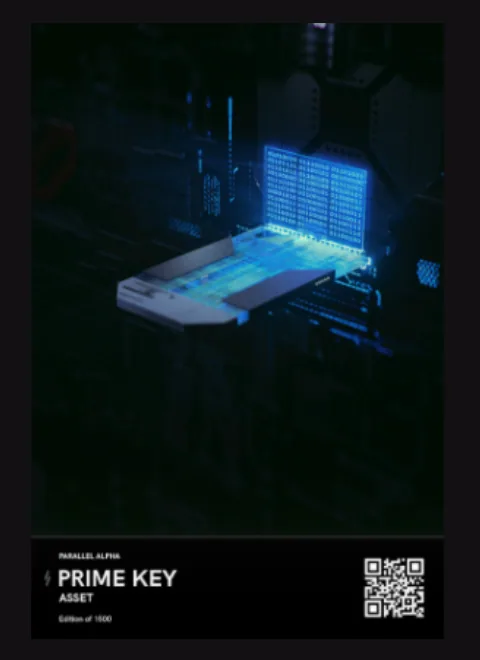
There are many different levels of card rarity in Parallel with Prime cards and Masterpieces being among the most sought after [11]:
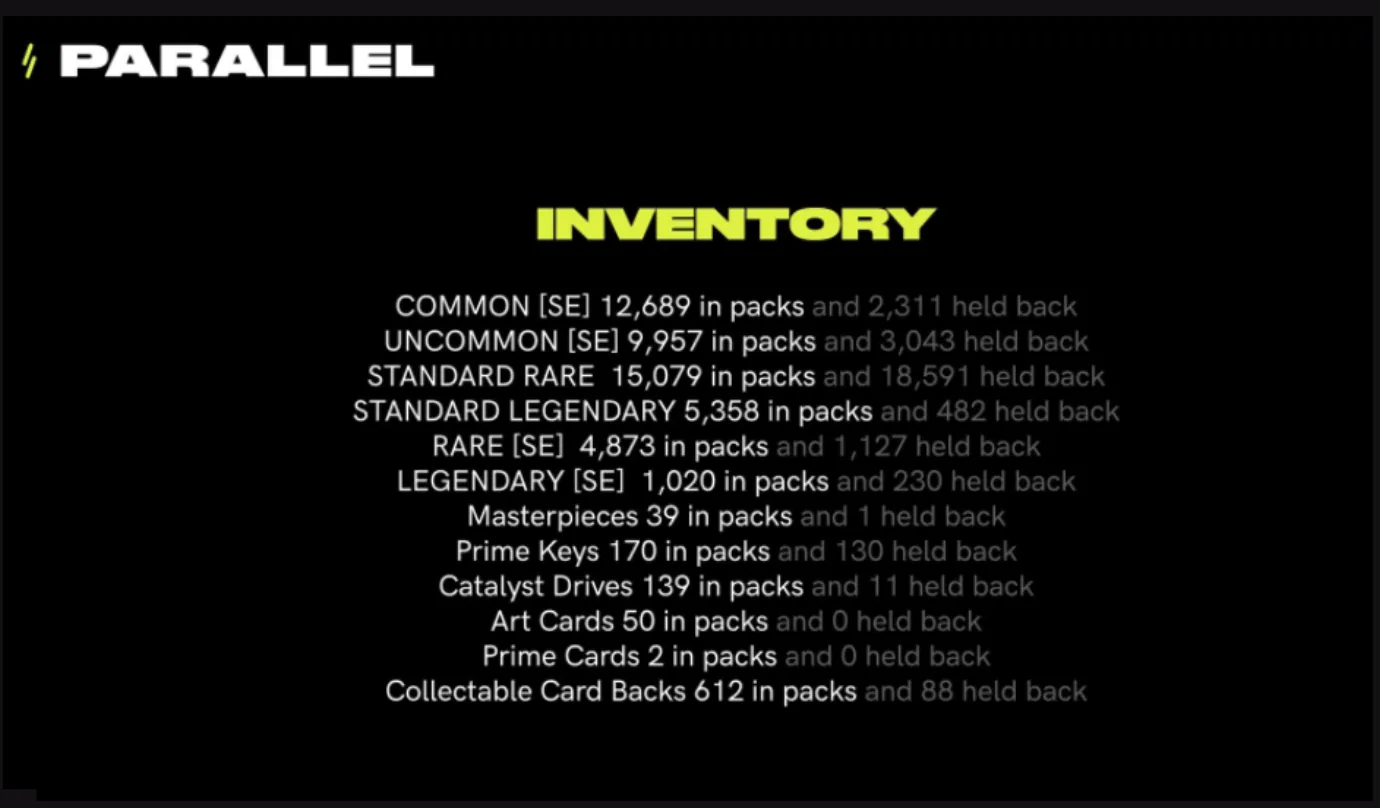
The sought after cards mentioned above include changes beyond standard cosmetic upgrades. Prime cards have incredibly strong effects when played and cannot be used in ranked competitive play. Masterpieces are non-playable 1/1s that earn a 1% royalty on all secondary sales of playable cards with the same art [12].
Parallel decks consist of 40 cards. At current floor prices, that means the cheapest deck costs 4 ETH or ~$15,711, which is a significant barrier to entry. Parallel plans to address this by using a "versioning called [CC] Card Continuum… [to] make all cards functionally available around $5 while preserving rarity of first editions and [SE] cards", but it isn't live yet [13]. This is expected to drive costs down over time as more packs are dropped with cheaper versions of the cards and supply expands. Parallel has also announced that they are working on special rewards for collectors who gather complete sets [14] as well as augmented reality capabilities [15].
SKYWEAVER
Skyweaver is a free-to-play fantasy TCG that launched on 7/17/2019 [16]. Skyweaver opted for a cross-platform gameplay focused go-to-market strategy that emphasizes exclusivity via an invite code system (e.g. you need an invite code to play). They opened up access to the game gradually (very similar to a guarded launch in DeFi) so that they could focus on iterating and improving the core gameplay experience [17].
Gameplay is similar to Hearthstone but with slightly different mechanics [18]. Skyweaver has ~66K players and is published by Horizon Blockchain Games. The company employs ~27 people and has raised $13.3MM in venture funding to date [19]. Notably, Horizon also maintains a Web3 wallet and developer platform for Ethereum (NFTs, DeFi, etc.) called Sequence (formerly Arcadeum).
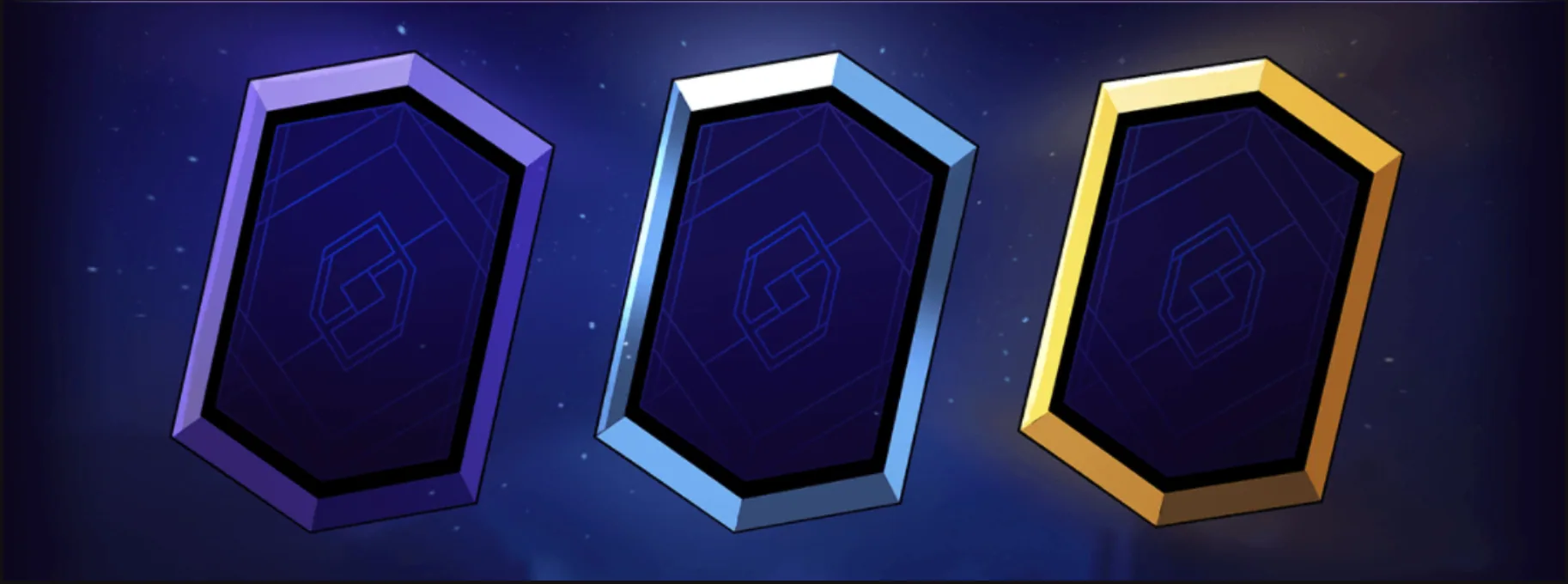
Skyweaver is play-to-earn and has 3 tiers of card rarities, which feature cosmetic border upgrades only [20]:
- Base - not tradeable, all cards can be unlocked for free by playing matches and earning XP
- Silver - tradeable, initial liquidity seeded by the company, earned via ranked rewards and Conquest (a win-streak mode)
- Gold - tradeable, limited supply, mainly earned from playing Conquest or placing top 500 in rankings
Unfortunately, there are no persistent items or progress currently (outside of a couple special Gold cards) until the soft launch which is expected sometime soon™. I played for a few weeks mid-2020 but ultimately stopped for this reason (peaked at rank ~25 in Discovery, current stats below):
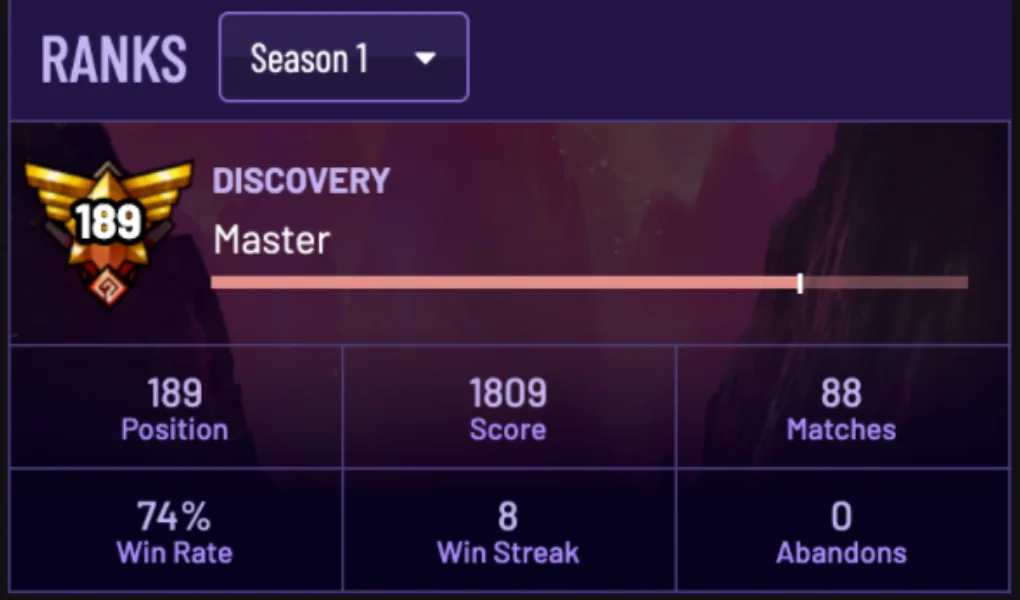
The gameplay is fun and enjoyable though, and I would definitely consider revisiting the game when there is persistent progression.
RECAP AND ANALYSIS
In summary:
| Parallel | Skyweaver | |
|---|---|---|
| Playable | No | Yes |
| Launch date | 3/25/21 | 7/17/19 |
| Tradeable | Yes | Yes (but not persistent until soft launch) |
| Users | ~7K | ~66K |
| Fundraising | ~$3.5MM from community sales | $13.3MM in venture funding |
| Employees | ~8 | ~27 |
| Multiple offerings | No | Yes (Sequence) |
| Go-to-market | Art and NFT-drop driven community bootstrapping via booster packs | Cross-platform gameplay focused with an invite code system |
| Gameplay | TBD | Hearthstone-like with different mechanics |
Parallel's sell cards before gameplay approach resembles last cycle's whitepaper only ICOs. That's not to say they won't ship a great product - they certainly have an economically motivated community evangelizing them (like 0xSisyphus). Their go-to-market approach rode the NFT hype wave to generate lots of publicity on social media and Crypto Twitter for their dope artwork and worldbuilding. However, the current ~$15.7K barrier to entry for new players is a significant obstacle to overcome, but the team has future plans to address this.
On the other hand, Skyweaver's free-to-play play-to-earn model makes it much more accessible for new users currently, as evidenced by their ~66K players vs. Parallel's 7K owners. Horizon has spent considerable time iterating on and improving the core gameplay experience and it shows. In addition to this, they also have multiple product offerings like Sequence which can potentially help with network effects.
But in crypto and elsewhere, the "best" products don't always win. For example, consider Mooniswap (now 1INCH Liquidity Protocol) [21], which offers a novel design that captures more profits for liquidity providers, but has failed to gain significant traction compared to competitors.
NFTs and TCGs are a perfect match for each other, which is why the next blockbuster TCG to rival Hearthstone will absolutely be a blockchain based one, and it might just be Parallel or Skyweaver…
Special thanks to my fellow eGirls (especially AutomataEmily, CL, DegenSpartan), Damir Bandalo, Soby, Matt Luongo, and Sisyphus for reading drafts of this.